
- News
- Sports News
- Football
- FIFA World Cup 2018: Unforgiven, it’s the Messi thing
Trending
This story is from June 21, 2018
FIFA World Cup 2018: Unforgiven, it’s the Messi thing
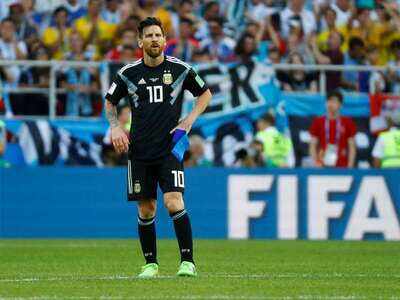
With all the expectation riding on the player now known as GOAT (Greatest Player of All Time), his efforts to break down the Icelandic wall seemed futile.
ALSO READ: 'Don't blame Messi', pleads Argentina boss Sampaoli
Back in 2002, Sven had the players prepared for a penalty shoot-out; a sports psychologist highlighted that eye-contact with the rivals should be avoided.

ALSO READ: Signs bad for Messi's last chance to emulate Maradona
It was fitting payback for 1998, when the same Beckham had gotten himself sent off after succumbing like an angry child to the expert provocations of the same Simeone. After England’s exit, the tabloids ran Beckham’s picture and the caption ‘10 players and one stupid boy’.
Hernan Crespo, who himself missed a penalty in that clash in 1998, speaking on Argentina TV said this week that he hoped Messi would be able to rise above the bitter blow of taking a kick which didn’t turn into goal. His reasonable, calm appraisal of the situation is hard to make out amidst the cacophony of panic that seems to have gripped football chat-shows in Argentina. Presenters scream and swear at each other and the players. Nobody quite dares question Messi himself, but the sense of fear is palpable.
With all the expectation riding on the player now known as GOAT (Greatest Player of All Time), his efforts to break down the Icelandic wall seemed futile. Even Aguero’s goal (heated debate ensuing about whether it was a fluke or the result of clever strategising) appeased anxieties in a nation which rightly or wrongly – wrongly in this correspondent’s humble opinion – feels nothing short of lifting the trophy will do.
“I missed five penalties in a row and was still Maradona,” Diego Maradona pronounced by way of comfort, revealing several things in one statement, the most salient perhaps being that his main objective was, and still is, being Maradona.
Messi’s objective is neither to be Maradona, nor even to be Messi. What he wants is to win; not winning seems to deplete him. To depress him almost, and I use the word carefully. And when he is depressed, the rest of the team gets depressed too.
Further fuel for the low morale came with his nemesis, Cristiano Ronaldo, scoring a hat-trick in Portugal’s opening game. On paper, both men are the only superstars in ordinary teams. But their respective debut performances leave us with enduring images in stark contrast to each other; the adonislike Ronaldo confidently smashing three against a valued Spanish side, triumphantly holding his head high, vis a vis the petite Messi looking down at the ground, clearly feeling the burden of something.
Argentina have spent the past days discussing whether or not languishing in Maradona’s shadow is going to turn into the final resting place for Leo; whether or not Cristiano’s blatant narcissism is a justified reflection of a man who has earned his due adoration by performing according to expectations. The press packs can be brutal, perhaps understandably, because if Argentina go home after just three games, the party is pretty much over for all.
Crespo’s serene voice hinted that the players need to relax and find the space to relish the unique experience of playing in a World Cup. “What’s the worst that can happen?” he said. “Getting knocked out. It’s not the end of the world; 16 teams are going home in a few days.”
Such normalising discourse has no place in the cut-throat world of elite international football, it seems. After England were eliminated in 2006, Sven pleaded with the press who were salivating like assassins: “Look after Wayne Rooney” he said, aware that the kid was about to take the flak big time, “You need him more than me. Please. Don’t kill him”.
But kill him they did.
End of Article
FOLLOW US ON SOCIAL MEDIA
Visual Stories









Top Sports News
TOP TRENDING
Popular Categories
Hot on the Web
Top Trends
IND vs BAN Live ScoreCaleb WilliamsBilkis Bano CaseAnne AllanVince McMahon Netflix DocuseriesIPL Player RetentionHigh Paying Freelance JobsSean CombsIsrael Hezbollah WarNEET UG Paper Leak CaseKerala Lottery ResultsTamil Nadu NEET UG CounsellingTirupati LadduWest Bengal Teacher RecruitmentSoudi Al Nadak IslandKerala Bans Study NotesLive Cricket Score
Trending Topics
Living and entertainment
Latest News
“Goodbye Meta AI”: How over 600,000 people, including celebrities, fell for a fake message on Facebook, Instagram'It's been done 5 times already': Supriya Sule's jibe at PM Modi on Pune Metro inaugurationHC raps CCP for evicting 2 from fish mkt buildingTravis Kelce Shares His Excitement for His Acting Debut in Ryan Murphy’s Mystery Thriller GrotesquerieRhea Ripley’s husband comments on how much time she has left in the ringNayanthara and Vignesh Shivan share emotional notes on their twins Ulag and Uyir's second birthdayIsraeli strikes kill 600, displace 90,000 as Lebanese civilians flee in DesperationNavya Naveli Nanda reacts to Kolkata rape-murder case, calls for accountability and safer spaces for womenArijit Singh apologizes to his female fan as the security guard held her neck during his UK concert: 'I could not protect you'World tourism day 2024: Recreate your favourite filmi moments at these localesSearching for synthetic opioid rescue agents: Identification of atoxifent as a potent opioid agonist with reduced respiratory depressionKrithi Shetty shares a sneak peek of her birthday celebration - SEE PICSChennai court acquits customs officer in diamond misappropriation caseSaif Ali Khan admits that the ‘Adipurush’ controversy was 'unsettling'; says “you need to stay away from religion...'Valpoi torrential rainfall sets record, crosses 200 inchesWeight loss and more: 5 reasons to eat soaked methi seeds every morningThere’s plastic in your chai-samosa, and India is No. 1 culpritOptical Illusion: Only a visually sharp person can spot the caterpillar on this tree
Copyright © 2024 Bennett, Coleman & Co. Ltd. All rights reserved. For reprint rights: Times Syndication Service